
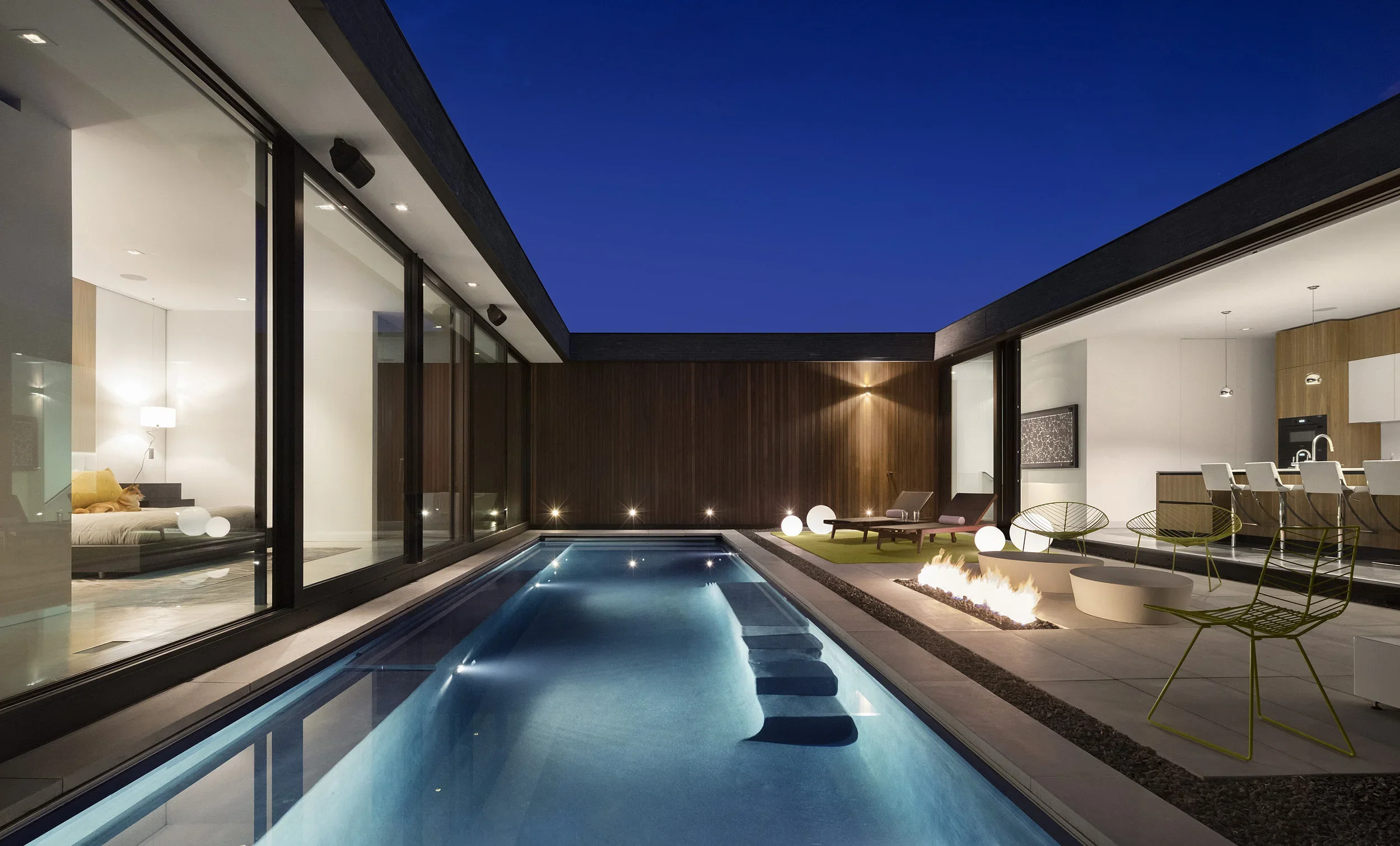
Water Feature Design in Boulder
Water changes the character of a landscape, and in Boulder, where the Flatirons rise against the sky and high-altitude light sharpens every edge of color and shadow, a well-designed water feature can ground an outdoor space against that dramatic backdrop. At EBD Studios, we design water elements shaped by the specific conditions of the Front Range: the downslope winds that sweep off the foothills, the intense UV exposure that comes with elevation, and the freeze-thaw cycles that define a Boulder winter. A water feature here has to hold its own against big mountain views while performing reliably through wide seasonal swings.
Each project begins with close observation. We study the property, noting how foothills winds move across open ground, where snowmelt drains in spring, and how existing architecture and plantings already establish flow and hierarchy. The design emerges from this understanding, whether it's a terraced basin that mirrors the layered rock formations above the city, a linear channel that runs along a mountain modern courtyard, or a still pool that holds the reflection of the Flatirons at golden hour.
Materials are selected for their ability to withstand freeze-thaw cycling, intense high-altitude sun, and rapid temperature swings between day and night. Local sandstone, cast concrete, and weathering steel become structural elements that anchor the feature while keeping the water as the primary focus.
Custom Water Features Shaped by Boulder's Front Range Topography
A custom water feature is functional landscape infrastructure that changes how outdoor space is used and experienced. It can establish a threshold between garden rooms, soften the sound of nearby traffic or trail activity, or provide a cooling presence during Boulder's hot, dry summers. On properties that climb into the foothills or sit along the mesa above town, the design must work with steep grade changes and the way water drains during sudden summer storms.
We study how water will perform as it moves. A steeper drop generates more sound and kinetic energy, useful for masking road noise on busier streets. A shallow reflecting pool slows movement and maximizes the play of that high-altitude light across the surface. Native plantings along the edges ease the transition between water and stone, while integrated seating or low walls allow the feature to be engaged directly.
Waterfalls and Cascades for Foothills Properties
In Boulder, where many residential properties step up hillsides in neighborhoods like Chautauqua, Mapleton Hill, and North Boulder, a waterfall can follow the natural rise of the land, using stacked local sandstone ledges and recessed catch basins to reinforce the sense of movement down the slope. The sound profile varies with height and flow rate, and can be tuned to the scale of the lot.
For homes closer to the foothills or tucked into a sloped backyard, a compact cascade can deliver the sensory presence of falling water within a tight footprint. Drought-tolerant natives like blue grama grass, penstemon, and rabbitbrush frame the edges without competing for water.
We design every system with winterization in mind. Freeze-thaw cycling can crack improperly built basins and damage pump components, so plumbing, filtration, and drainage are all built to be drained down or protected through the cold months, with operation strategies that account for Boulder's wide swing between summer heat and winter freeze.
Fountains and Geometric Water Elements
Fountains function well in formal gardens, entry courtyards, or symmetrical outdoor rooms where structure and order are design priorities. In Boulder, where mountain modern and mid-century architecture both have a strong presence, a fountain can echo the clean lines of the built environment while introducing organic movement through water.
Scale and proportion inform these decisions. A tall central jet suits an open lawn or formal entry plaza, where it can hold its own against the surrounding mountain views. A low bubbling basin fits a walled courtyard or side terrace. Strategic lighting extends evening usability, and at this elevation, where the air is clear and the stars are bright, a well-lit water feature becomes a focal point well after sunset.
Integrating Water with Hardscape and Native Plantings
Water features engage with surrounding materials, plantings, circulation, and views. In Boulder, this means designing with elements that handle UV exposure, freeze-thaw cycling, and long dry stretches between snow events. Local sandstone paving, weathering steel edging, and decomposed granite paths create durable transitions between planting beds, lawns, and water.
Plant selection emphasizes natives and xeric species adapted to Colorado's semi-arid climate and low water requirements. Blue grama grass, native penstemon, and silver-leaved sage soften water edges without demanding irrigation. Trees like Rocky Mountain juniper or native cottonwood provide scale and seasonal shade without overpowering the water element.
Start Your Water Feature Project in Boulder
If you're considering a water feature for your Boulder property, Elevate by Design brings a process grounded in site intelligence, material durability, and long-term performance. We design outdoor environments that respond to how you live and how this Front Range landscape behaves.