
Boulder Residential Landscape Architects
Residential landscape architecture defines how a property functions and feels. At EBD Studios, we design outdoor environments that respond to Boulder's unique conditions: foothills terrain, high-altitude climate, mountain views, and four distinct seasons. Every project is shaped by the site itself, the architecture of the home, and how you'll use the space throughout the year.
Materials are selected for performance and longevity. Stone, weathering steel, concrete, and naturally durable woods must withstand freeze-thaw cycling, intense UV exposure, and snow load. Plant selections prioritize drought tolerance and adaptability to Colorado's semi-arid climate. The goal is a landscape that improves with age rather than requiring constant intervention.
Landscape Architecture Tailored to Your Property
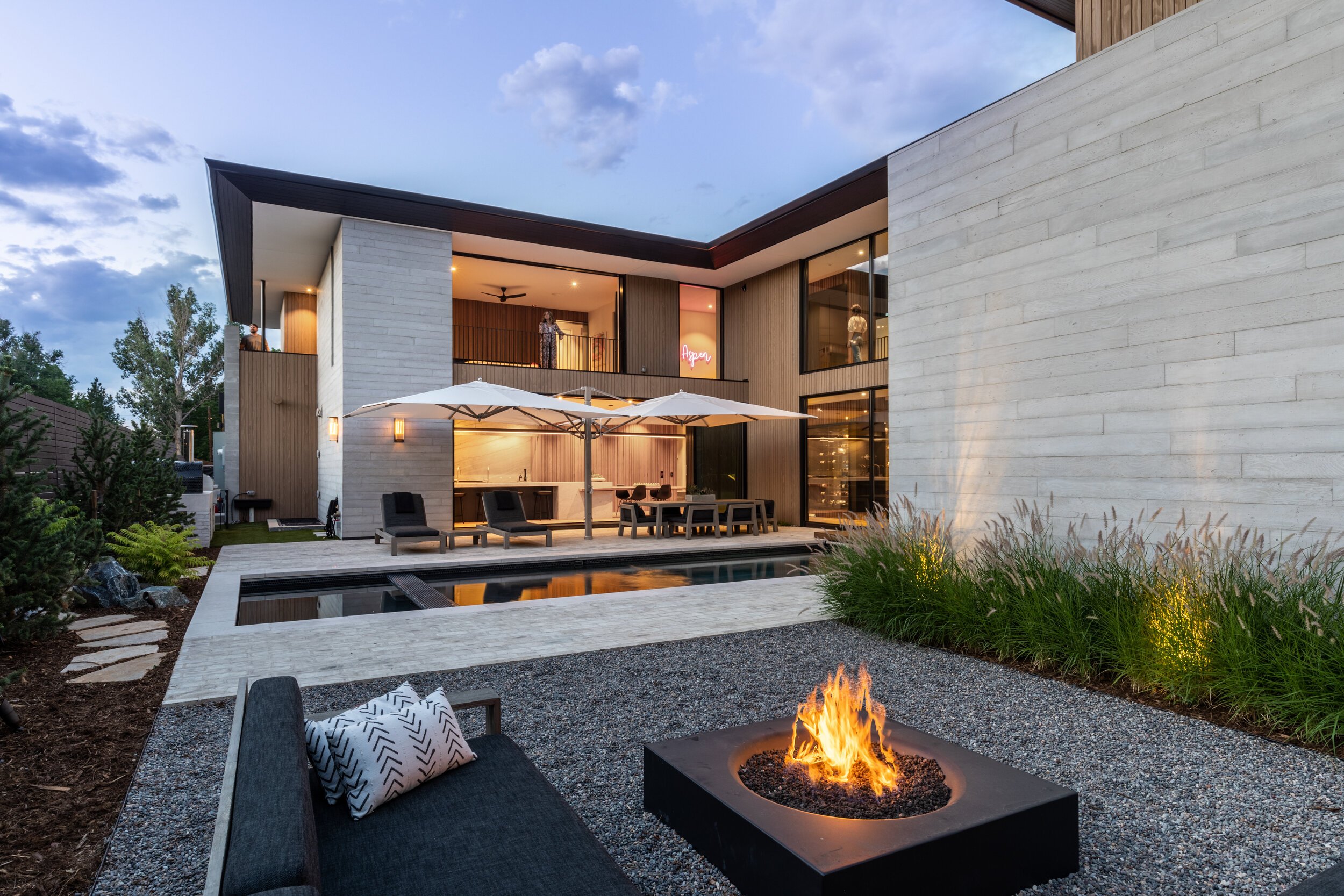
Custom landscape architecture goes beyond decorative plantings or generic layouts. It's about creating outdoor rooms with clear purpose: a terrace for dining, a courtyard for entertaining, a garden for native plantings, a fire pit area for evening gatherings. Each zone is positioned based on sun exposure, prevailing wind patterns, views, and proximity to interior spaces.
We design for how people actually move through a property. Pathways connect key areas without unnecessary detours. Steps and ramps navigate grade changes safely and comfortably, an especially important consideration on Boulder's sloped foothills lots. Transitions between different surfaces or elevations are handled with intention, creating a sense of flow rather than abrupt shifts.
Hardscape establishes structure. Patios, retaining walls, steps, and borders provide the framework that organizes the landscape. Plantings introduce softness, color, and seasonal change. Together, these elements create a cohesive outdoor environment that feels complete.
Addressing Boulder's Terrain and Climate
Many properties in Boulder sit on sloped lots or foothills terrain. Retaining walls, terracing, and grading strategies turn challenging topography into usable outdoor space. Drainage systems are integrated into the design to manage seasonal stormwater runoff, sudden summer downpours, and spring snowmelt while preventing erosion.
Wind protection is essential. Downslope winds off the foothills require thoughtful placement of walls, fences, and planted screens that block gusts without cutting off mountain views or creating a closed-in feeling. The placement of these elements affects how comfortable a patio or seating area will be, particularly during the windier winter months.
Plantings are chosen for their ability to thrive with minimal supplemental water. Native Colorado species, xeric perennials, and drought-tolerant shrubs reduce maintenance while supporting local wildlife. Trees provide shade, frame mountain views, and anchor the landscape visually without requiring excessive care.
Integrating Outdoor Living Features
Fire features, outdoor kitchens, and built-in seating extend the functionality of the landscape into cooler evenings. These elements are designed as part of the overall composition, not added as afterthoughts. Fuel sources, seating proximity, lighting, and material choices are all considered early in the process, along with local fire restrictions that come into play during dry stretches.
Lighting allows the landscape to remain usable after dark. Path lights ensure safe movement. Uplights highlight trees and architectural features. Downlights from pergolas or overhangs create ambient illumination. The result is an outdoor environment that works from morning through evening, including the clear, cold nights Boulder is known for.
Shade structures provide relief from Boulder's intense high-altitude sun. Pergolas, louvered roofs, or planted arbors can be positioned to filter light where it's needed most, making outdoor spaces comfortable during peak afternoon hours while maintaining views of the Flatirons.
A Design Approach Focused on Cohesion
Every landscape project begins with an analysis of existing conditions: grade, drainage, soil, sun exposure, wind patterns, and views. This information guides decisions about layout, materials, and plantings. Concept drawings establish the overall direction. Detailed construction drawings provide contractors with the information needed to build accurately.
Throughout the process, we ensure that every element supports the larger vision. Materials are consistent with the home's architecture. Plantings complement rather than compete with hardscape. Circulation patterns make sense for how the property will be used day to day.
The outcome is a landscape that feels intentional and unified, where each component serves a clear purpose and contributes to the whole.
Begin Your Landscape Architecture Project in Boulder
If you're planning a comprehensive landscape project for your Boulder property, EBD Studios can guide you through a design process built on site analysis, material knowledge, and long-term thinking. We create outdoor environments that respond to terrain, mountain climate, and how you live outside.
The result is a landscape that feels purposeful, cohesive, and built to endure.