
Patio Design in Boulder
A patio changes how you inhabit your property. In Boulder, where high-altitude sun, dramatic mountain views, and four distinct seasons shape outdoor living, the right patio becomes a space you use across most of the year, not just during the brief stretch of summer. At EBD Studios, we approach each project as a response to the site itself: its orientation, its relationship to prevailing winds, its connection to the home, and the way people will actually move through and use the space.
We work with materials that can handle Boulder's climate swings. Local sandstone, flagstone, and travertine offer texture and thermal performance that holds up through freeze-thaw cycling. Poured concrete allows for precise grading and integrated drainage. Pavers provide flexibility on sloped terrain common in foothills neighborhoods. Each surface is chosen for how it performs under intense high-altitude sun, snow load, and rapid temperature swings, not just how it looks in a catalog.
The design process starts with questions: How do you want to use this space? What time of day will you be out here? Do you need wind protection, shade, or a sheltered spot to extend the season into fall and spring? The answers shape everything that follows.
Patios Built for Boulder's Mountain Climate
Boulder's semi-arid, high-altitude climate brings specific design considerations: intense UV exposure, sudden afternoon thunderstorms in summer, strong downslope winds off the foothills, and winters that bring snow load and repeated freezing and thawing. A patio here needs to account for all of it.
We design for drainage first. Water and snowmelt must move away from the home and off the patio surface without pooling or refreezing into ice. Slopes are calculated, not guessed. Gravel bases are compacted to handle freeze-thaw movement. Joints are spaced to accommodate that expansion and contraction without cracking.
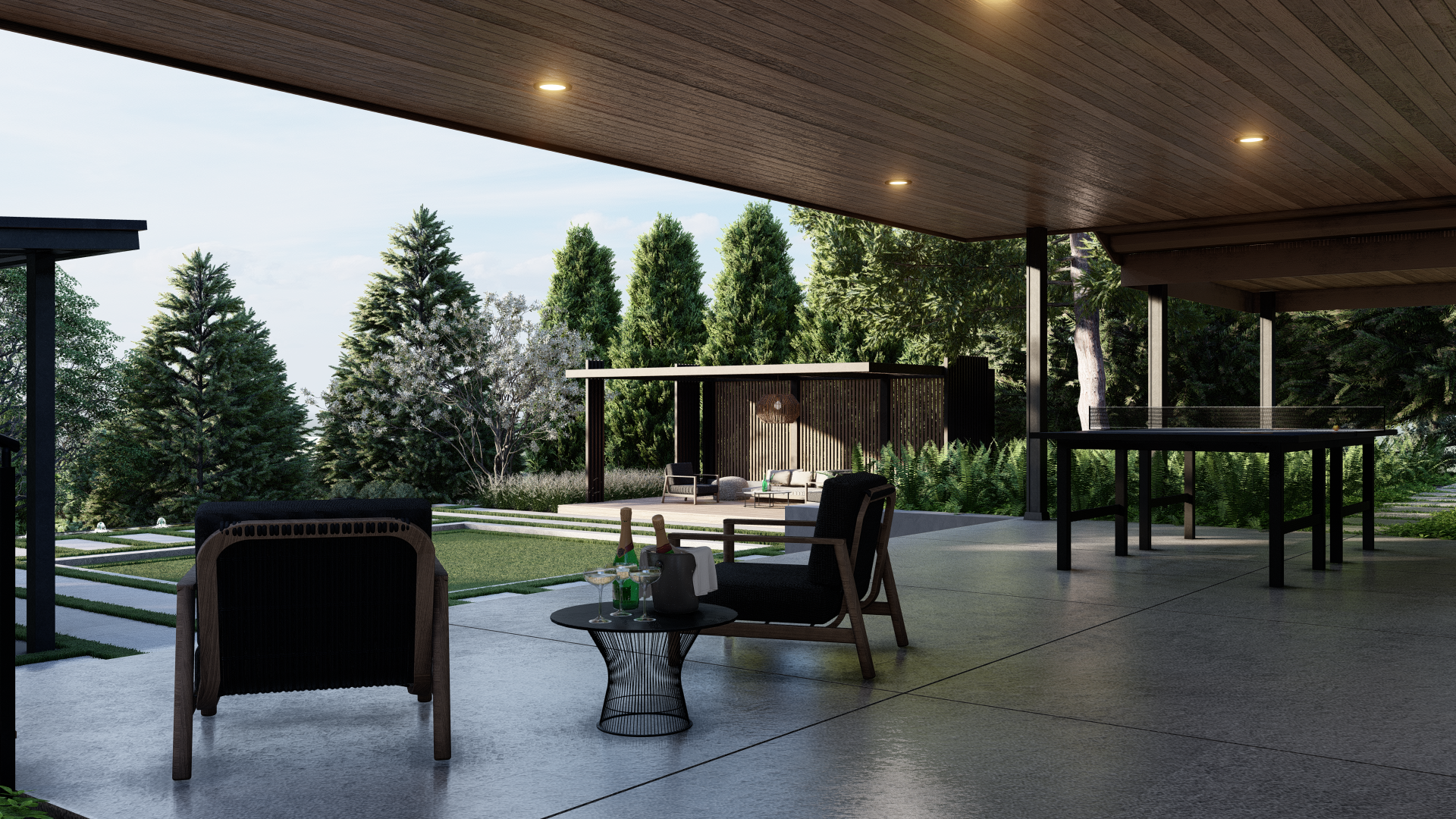
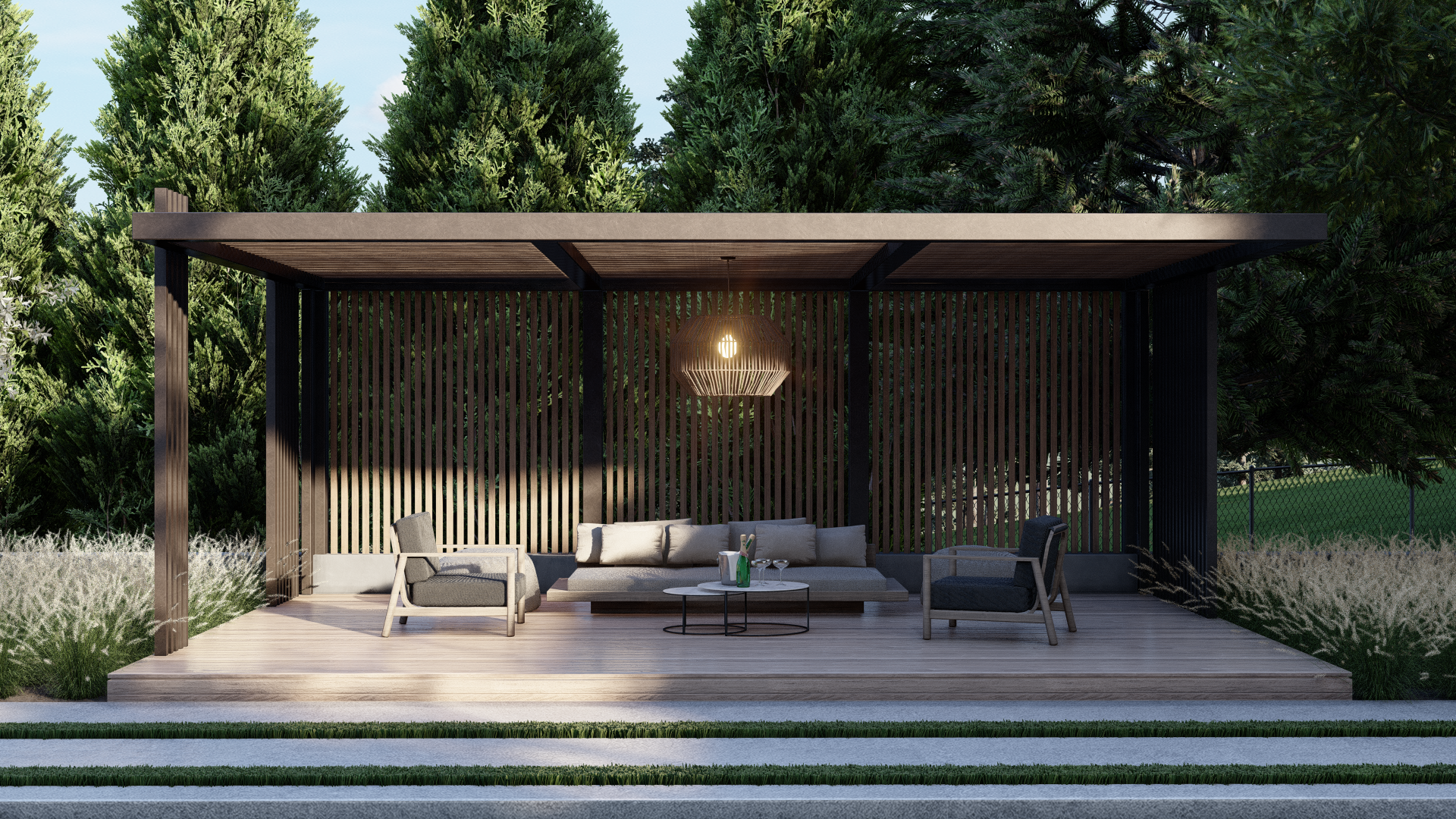
Shade structures (whether pergolas, louvered roofs, or planted screens) are positioned based on sun angle and seasonal patterns. At Boulder's elevation, even a brief stretch in full sun feels more intense than it would at sea level, and a west-facing patio in July can be uncomfortable without intervention. We plan for that from the start, using overhead elements or native plantings to filter light where it's needed most.
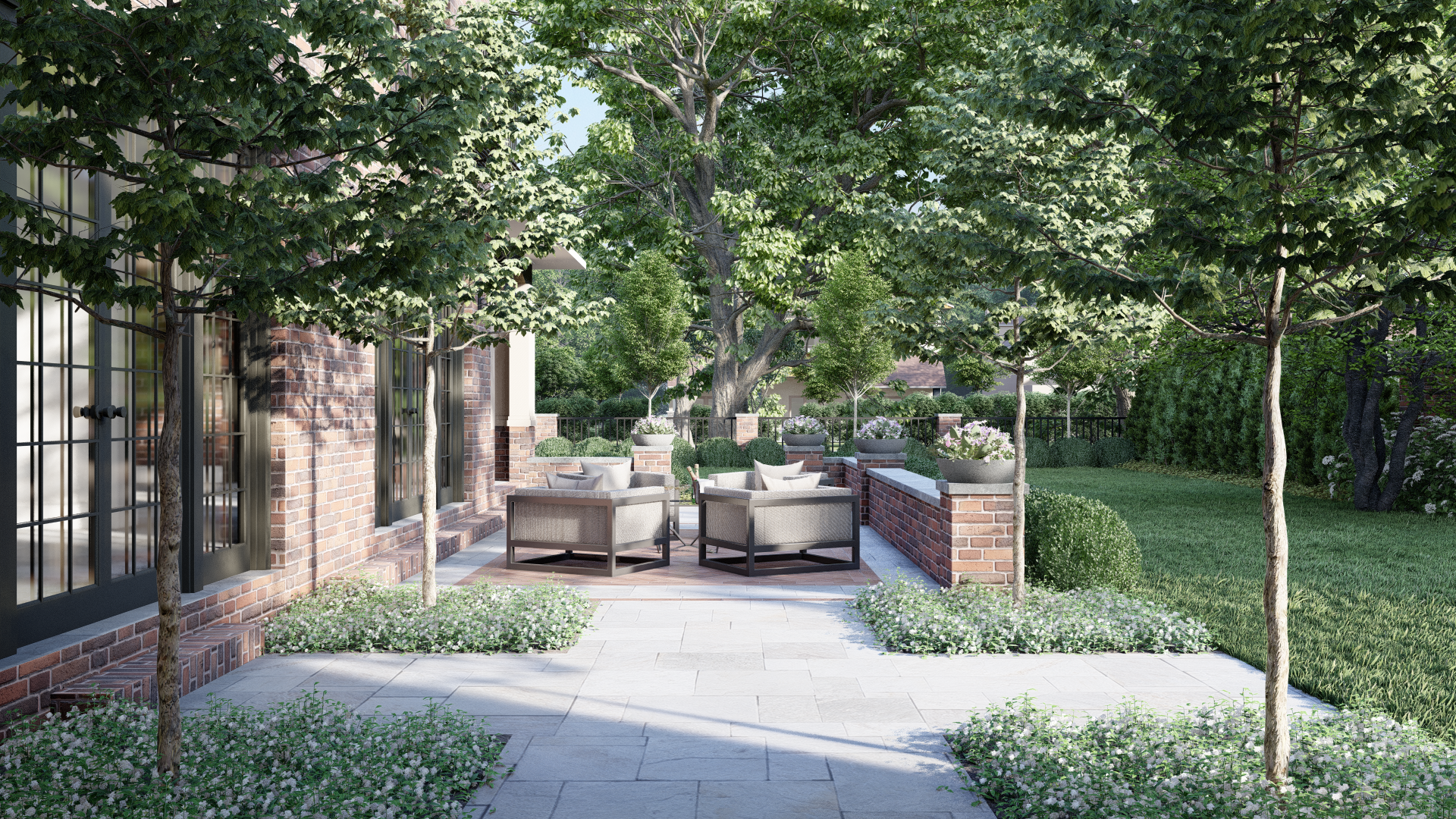
Seating walls, planters, and low retaining walls often double as wind deflection. They define zones within the patio, creating sheltered areas even when downslope winds push through the space. These elements are built into the design early, not added as afterthoughts.
Connecting Indoor and Outdoor Spaces
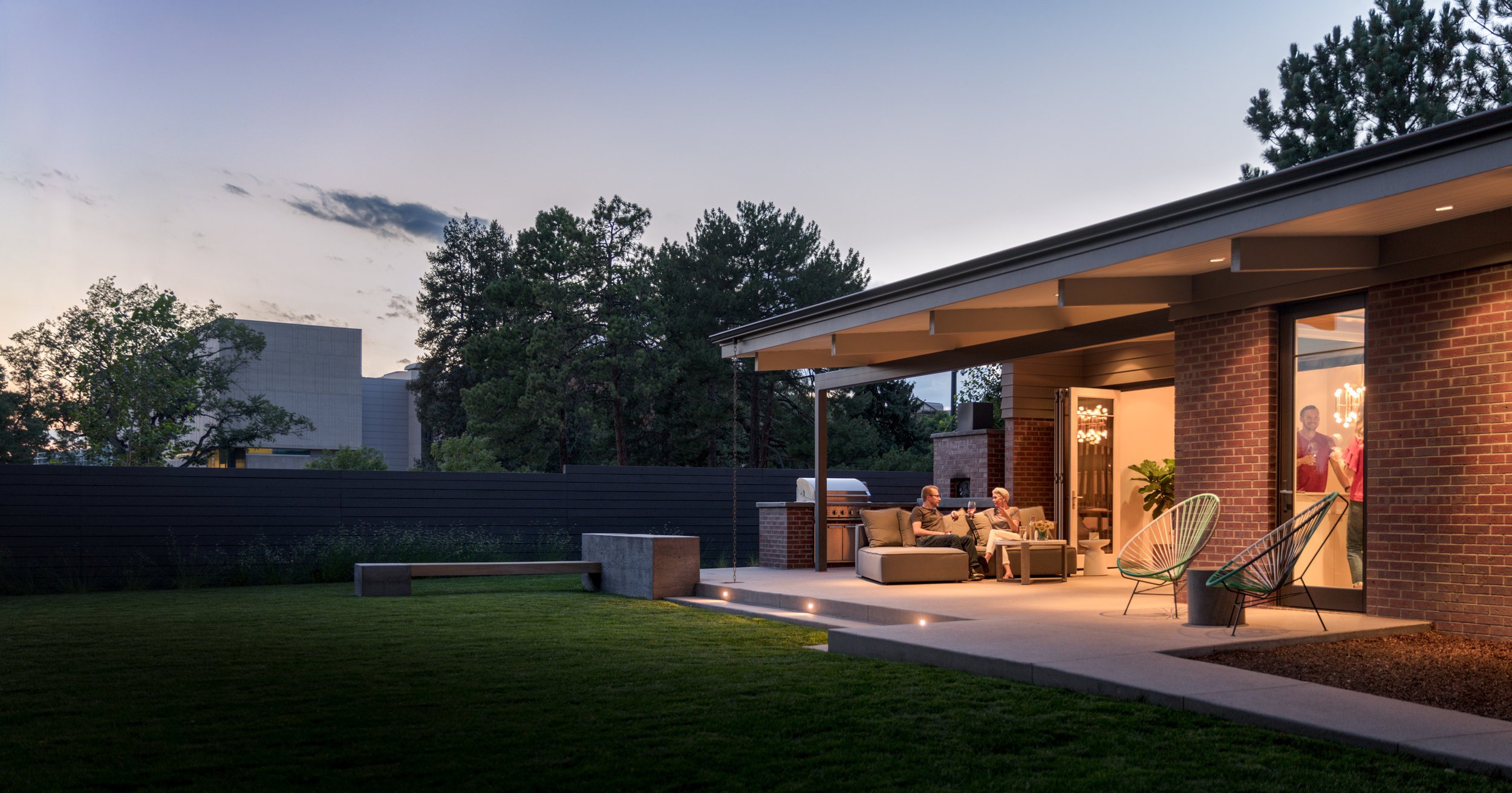
A patio should feel like a continuation of the home, not a separate zone you visit occasionally. We study floor heights, door placements, and interior sightlines to create seamless transitions. If the interior has wide plank flooring, the patio might use linear stone with similar proportions. If the home features mountain modern or craftsman detailing, the patio materials echo that architectural language.
Thresholds matter. A single step down from a door can feel abrupt. A gradual grade change or a wide landing makes the shift more natural. We also consider how the patio relates to the rest of the yard: whether it opens directly onto lawn, terraces up a sloped lot, or wraps around a corner to capture views of the Flatirons.
Furniture placement is part of the design, not something left to chance. We map out where seating clusters will go, how people will circulate, and where pathways should lead. The result is a layout that works from day one, with clear purpose and flow.
Material Selection for Durability and Character
Material choice defines the feel of the space. In Boulder, where mountain modern and craftsman architecture both have a strong presence, we select surfaces that align with both the home's style and the broader landscape context.
Travertine and local sandstone bring warmth and natural variation that complement mountain and craftsman aesthetics. Lyons sandstone offers regional character and proven durability through Colorado winters. Poured concrete can be textured, scored, or tinted to complement almost any aesthetic while maintaining clean geometry.
We avoid materials that can't handle the climate. Surfaces that crack under freeze-thaw cycling, materials that absorb too much moisture and spall over time, or pavers that become slick under snow and ice are all eliminated from consideration. Every choice is vetted for long-term performance, not just initial appearance.
Edges and borders are detailed carefully. Weathering steel edging provides crisp separation between patio and planting beds. Stacked stone walls tie into foothills settings. Decomposed granite or crushed stone fills gaps where rigid paving doesn't make sense.
Lighting, Plantings, and Layered Details
A patio extends its usefulness when lighting is planned from the beginning. Downlights in overhead structures, uplights in adjacent plantings, and low-level path lights create layers of visibility without glare. We position fixtures to highlight texture and movement, not just flood the space with brightness, and to extend usability into Boulder's clear, cold evenings.
Plantings soften the edges and anchor the patio within the larger landscape. Drought-tolerant natives, xeric grasses, and low shrubs reduce maintenance while adding seasonal interest. Trees placed strategically, like aspen or native cottonwood, provide shade and frame mountain views without overwhelming the patio footprint.
Built-in planters, raised beds, and low walls introduce vertical elements that break up large expanses of paving. They also offer opportunities for color, fragrance, and habitat, turning the patio into something more dynamic than just a flat surface.
A Design Process Rooted in Site Observation
Every project begins on-site. We walk the property, take measurements, photograph angles, and note existing conditions: grade, drainage, utilities, views, and problem areas. That information becomes the foundation for design decisions that follow.
Drawings show layout, materials, elevations, and details. They're precise enough for contractors to bid and build from, but clear enough for clients to understand what they're approving. Revisions happen early, before any ground is broken.
During construction, we coordinate with trades and review progress. Materials are checked for quality. Grading is verified. Drainage is tested. The goal is a finished space that matches the intent of the design and performs as expected from the start.
Begin Your Patio Project in Boulder
If you're planning a patio for your Boulder property, EBD Studios can guide you through a process built on site awareness, material knowledge, and long-term thinking. We create outdoor spaces shaped for how you live and how this mountain landscape behaves. Spaces built to endure and built to improve daily life.
The result is a patio that feels intentional, functional, and connected to both your home and the surrounding terrain.